
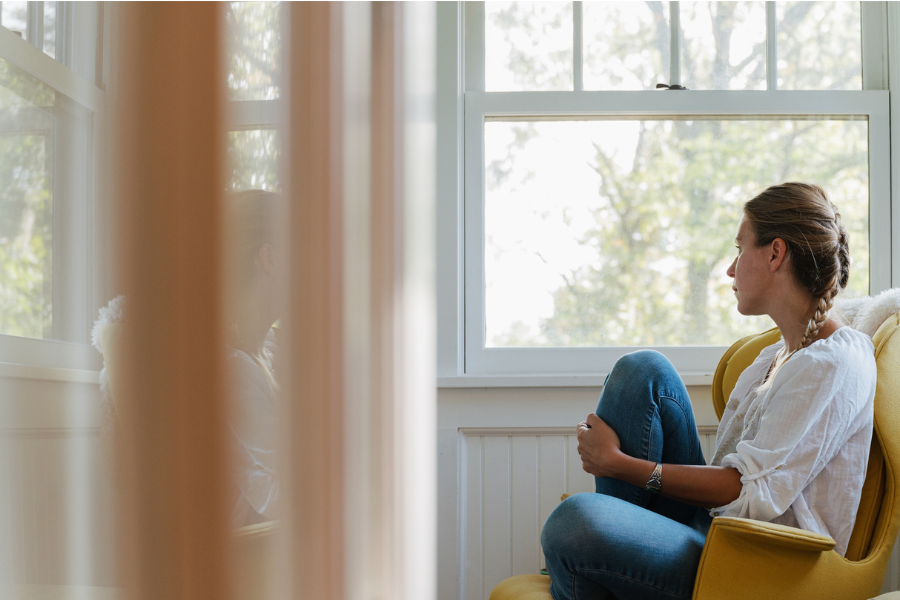
As I entered my 40th year on earth, and ten years into a potent longing to participate in one of the most epic acts of human creativity—building a family—I found myself, through a series of circumstances beyond my control, living alone and leading an autonomous life. My affections run deep for my joyous dog and two magical cats. Still, I feel a primal yearning to become the matriarch of a human family whose lineage will continue for generations.
The Evolution of Female Identity Beyond Motherhood
In recent decades, there has been a shift in the perception of what it means to be a woman in the Western world. A relatively new concept is the identity of the woman as an individual—someone who does more than give birth and raise children. Someone who lives, and lives happily, with a creative purpose other than procreation.
Many people don’t understand the choice to forgo motherhood, although it has begun to gain recognition as a personal decision—a shift born from the chorus of women’s voices illuminating the right to make this choice and the many reasons for it. Yet many women do long to experience the mystery of life forming inside the body, to surrender to birth when life and death merge so nearly. Or to help make space for and shape a life. To build and bind together a family, a tribe that might endure.
An Unforeseen Grief: Coping with Involuntary Childlessness in Modern Society
When women who desire initiation into motherhood face challenges with fertility, there is an understandable grief. The loss of all of that. A missed chance to carry on a lineage. It’s a grief at least as big as what we feel when someone we love eternally departs from our physical sight and touch—a grief for the lost chance to form, deliver, shape, and connect lives.
There is another category of motherhood-related grief, though—one that seems often to exist outside the margins of mainstream awareness. This is the grief carried by women who can physically give birth, or who would choose the role of mother in another way, but who have not yet found a partner to build a family with, or whose life circumstances are not yet ideal for becoming a single parent.
Barriers Affecting Motherhood and Family Planning
There is a plethora of options for women to have children without a partner. But these routes to growing a family, not to mention supporting one, are cost-prohibitive to many. And while single motherhood is a possibility, there are sometimes factors that hinder it. Money. Health. Home. Some women might also long for a life partner to help build a family, while others might be waiting to discover a more deeply bonded community.
For those who find themselves without a co-parent, a supportive village, sufficiently stable physical health, or a large enough bank account, becoming a mother isn’t as easy as it is sometimes portrayed. And the grief that arises from this missing motherhood—especially as time passes and this part of identity continues to seek fulfillment—can leave a void that sometimes feels impossible to bridge.
Though many women are starting families later in life than in previous generations, it’s hard not to feel, as each day closes, a grief in the space of not knowing exactly what will be. To carry a dream inside the womb, for decades even, and yet not know the specific means by which to make it real, gives way to a kind of grief all its own—one that’s not always openly talked about or acknowledged.
Honoring the Warriors Who Occupy the Uncertain Space of Waiting
Evolution has thankfully led to increasing levels of women’s sovereignty, to necessary rights and freedoms imperative to the progress and survival of our world, which rests so often on the shoulders of women. While this change has transpired, though, there has also been another change: the birth of a culture where many women half-embody an old archetype and half-embody a new one.
Still raising families in cycles with the seasons and still forming life in a womb shaped like the moon, yet bound nevertheless by the expectations and straight lines of a lingering patriarchy. Work, money, schedules, and independence at all costs can accidentally close us off to meaningful connections, partnerships, wisdom, and love.
Soon, the age-old guarantee of a tribe fades, leaving many modern women pregnant with a vision of family so strong it’s almost tangible, on the brink of birth in this strange dual space of both fertility, or mother-readiness, and longing.
When a woman becomes a mother, she is often rightfully revered and honored, for she has undergone an initiation, a rite of passage. But the women who bravely occupy uncertain territory while they eagerly await this initiation—what they carry in their hearts, wombs, and dreams—also deserve deep reverence and recognition.
For they are warriors in their own right. With the unimaginable strength required for enduring patience and faith, they stand poised, ready to rush in at the very first sign that they’re needed.
Reclaiming Feminine Wisdom: 3 Practical Tools for Healing and Inner Peace
We all have the power to create what we desire from a place beyond the realm of the rational or the imaginal. While I am not always a master at architecting every vision into reality, I have discovered—through many years of studying psychology, mindfulness, and intergenerational healing—some tools for effecting change at the level of mind, heart, body, and spirit to help us create the lives we imagine. Here are just a few things we can do to prepare for parenthood, to heal, and to reclaim the feminine wisdom within:
Preparing the Home & Heart
It can help to treat our homes as if the children we dream of are already here with us—to keep the space as we would, to clean with love, to make it joyful and peaceful, and even to keep a few sacred items or clothes to remind us that, as Picasso said, “Everything you can imagine is real.” To do this is also to nourish ourselves, which is an important part of the journey from maidenhood to motherhood.
Nourishing the Body
When pregnant, many women take greater care to give themselves proper nourishment to pass the right nutrients on to the new life developing within—even simple things like consuming enough protein, healthy fats, and greens. However, we don’t need to wait until human life is forming inside the womb, as we are, in fact, always pregnant with a life—our own.
Parenting the Inner Child
Lastly, a significant part of preparing for the transition from maidenhood to motherhood is addressing the intergenerational trauma that often yields a rampant lack of self-compassion. Whether or not someone chooses to become a parent, it is a critical step in our own healing to become unconditionally loyal and loving to ourselves. To take care of ourselves the way we would our own children. Because we all carry a child within us. A part of ourselves still wholly open and innocent, who needs us to love them fiercely, the way we always needed—and deserved—to be loved.
Faryn Sand is a self-compassion coach for parents, caretakers, and leaders, who holds a Masters Degree in Clinical Psychology and Counseling with a focus in holistic psychology and education from Teachers College, Columbia University. In her work, she guides them through the understanding of self-parenting, intergenerational healing, interpersonal neurobiology, and earth-based wisdom traditions. She also coaches children and teens in social, emotional, and ethical learning. You can learn more about her work at FarynSandcoaching.com